How we cut peak-period warranty processing from 25 hours to under 4
When warranty claims swallow a part-time CX role every week, the answer isn't more headcount — it's a system that turns unstructured pain into structured decisions.
On this page6 sections
Before Resolvi, peak season cost us a part-time support role. Twenty-five hours a week of warranty triage — emails, photos, draft orders, manual refunds, spreadsheet hand-offs to product. After we rebuilt the workflow as a system, that same peak season ran in under four hours a week. Here's what changed, and why headcount was never the right lever.
The real cost of unstructured warranty work
Helpdesks are built for conversations. Warranty claims are built for decisions. When a customer says "the zip broke after three months" you don't need a thread — you need: which item, which fault, what evidence, approve or deny, and which Shopify action fires. Most teams stitch that together by hand, every claim, every time.
- 8–12 minutes of agent time per claim, mostly copy-paste between tabs
- Inconsistent fault tagging — same defect described five different ways
- No structured data product can use without a monthly report cycle
- Replacement and refund mistakes that compound into chargebacks
What we changed
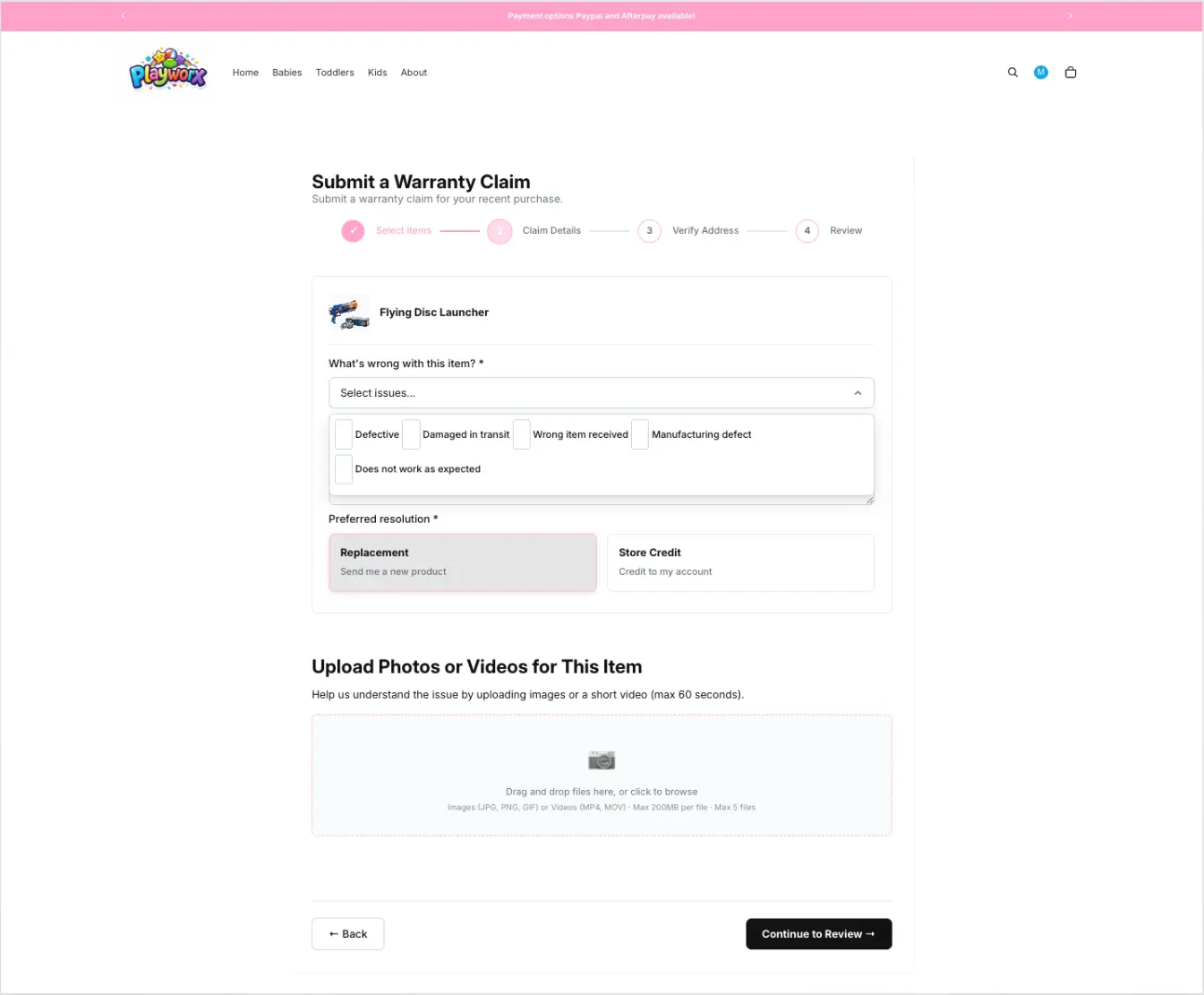
We rebuilt the claim from the customer side first. Instead of an open-ended message, the storefront portal asks the customer to choose a fault category, attach evidence, and confirm which items in their order are affected. That single change moves the work from "interpret the email" to "review the structured submission."
Decision-first, not conversation-first
Once the claim arrives structured, the agent's job is a decision: approve all items, approve some, deny with a templated reason, or request more info with a one-click form. Approval triggers the right Shopify action automatically — replacement draft order, refund, or store credit — based on rules the team set once, not relitigated per ticket.
The numbers, before and after
- Time per claim: 11 minutes → 2 minutes (median)
- Peak-season warranty hours: 25/week → under 4/week
- Replacement-order errors: ~3 per week → near zero
- Time-to-first-response: 18 hours → under 2 hours during business hours
- Product team self-service: monthly reports → live data
We especially love the fault gallery. Being able to filter and search faults and see all customer-submitted images and videos is the single biggest unlock for our product team.
— Steph, co-founder
What not to do
Don't bolt warranty onto your returns flow. Returns are a different problem with a different emotional arc — the customer doesn't want the product. Warranty customers do want the product; they want it to work. Optimising the returns funnel for warranties trains your team on the wrong instincts and dilutes both data sets.
Don't lean on tags inside your helpdesk either. Tags are descriptive; warranty needs structured fields you can compute on. "Quality" as a tag is meaningless — "zip teeth misaligned, batch X, week 14" is a manufacturing brief.
Where to start if you're staring at this problem today
- Audit one week of warranty claims and count the median agent minutes per claim
- Group fault descriptions into 8–12 structured categories your customers can self-select
- Pick three Shopify actions you want to fully automate (replacement, refund, store credit)
- Decide which decisions agents own and which automate on rules — and write the rules down
- Move customer intake to a structured form before you change anything internal
The work isn't glamorous, but it compounds. Every structured claim makes the next one cheaper to process and the underlying product data more useful.
Stop drowning in warranty tickets
Resolvi is built for Shopify brands that manufacture their own product. Structured fault claims, item-level decisions, automated Shopify execution.
7-day free trial · No credit card required · Install from Shopify App Store